Seattle Bubble has moved! Redirecting...

You should be automatically redirected. If not, visit http://seattlebubble.com/blog/and update your bookmarks.

Off-topic comment? Interesting link?
Head over to the forums, or click here for open threads.

Tuesday, October 31, 2006

Retail Spending Spikes In Washington

Seattle Times writer Melissa Allison seems a bit too excited about today's report that retail spending in Washington State grew by 10.5% from spring '05 to spring '06.

Those were the days, back in the spring when the flowers bloomed and the housing market sizzled.

Washingtonians had such confidence last spring that they spent with abandon on computers, hotel rooms, jewelry and other items.

They spent 10.5 percent more than they had a year earlier, the largest increase for taxable retail sales in Washington since 1990, according to April-to-June data released Monday by the state Department of Revenue.

Rising gas prices didn't wreck the mood and are not included in the retail-sales data.

Economists say the spending has calmed since then, doused by a slowdown in the housing market and slower employment growth.
...
The state's economic growth and therefore the spending are propelled by employment gains, particularly in high-wage sectors such as aerospace, software and construction, Sohn said.
So, the spending is "propelled by employment gains," but when it "calms" it's because of a slowdown in the housing market? What a delightful contradiction. I fail to see how a 10.5% retail spending increase can be attributed to "employment gains." Were 10.5% more jobs added? Did everyone get a 10.5% raise? Smells like false assertion to me. I think it's much more likely that the spending increase is primarily the result of home equity extraction and a declining savings rate.

Maybe it's just me, but the news that people are spending increasingly more as incomes stay practically flat doesn't seem like something to celebrate.

(Melissa Allison, Seattle Times, 10.31.2006)

Time For A Sale

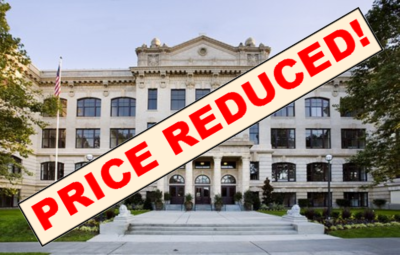
Queen Anne High School - Price Reduced!
Our local condo enthusiast Matt made a post this morning pointing out an interesting sign of slowing:
For a limited-time, Queen Anne High School is offering a $5,000 BUYER BONUS on all homes under $400,000*!
With its close-to-downtown location, Seattle's perma-hot real estate market, and all the free fawning press that this project got when it opened last month, you would think it would have sold out in record time.

Of course, I'm sure the local real estate cheerleaders would be more than happy to provide me with a plethora of perfectly rational-sounding explanations about the slow time of year, undesirable floorplans, and a "return to normal" for the market. Still though, does anyone doubt that this would have sold out in a week had it opened in September 2004 or 2005?

I'm just sayin'...

(Matt Goyer, Urbnlivn, 10.31.2006)

Monday, October 30, 2006

Puget Sound Cities Not Very Safe

Research company Morgan Quinto released its latest "safest and most dangerous cities" rankings today, and overall, the Puget Sound did not fare particularly well. The Associated Press story reprinted in the P-I explains a little bit about how the 371 cities were ranked:

Cities are ranked based on more than just their crime rate, Morgan said. Individual crimes such as rape or burglary are measured separately, compared to national averages and then compiled to give a city its ranking. Crimes are weighted based on their level of danger.
While no city in Washington showed up on the "25 Safest" or "25 Most Dangerous" lists, the only Puget Sound city that managed to break out of the bottom third of the list was Bellevue, at #57. Seattle came in at #262, more dangerous than 70% of the cities that were ranked. Federal Way, Everett, & Kent fared even worse, ranking 277, 283, and 289, respectively. However, in what probably comes as no surprise to most of us, the lowest-ranked city in the Puget Sound (and even the whole state of Washington) was Tacoma, coming in at a miserable 324 (more dangerous than 87% of the ranked cities).

Here's a table with all the cities from Washington State that were ranked:
RankCity
57.Bellevue, WA
134.Spokane Valley, WA
188.Vancouver, WA
220.Spokane, WA
262.Seattle, WA
277.Federal Way, WA
283.Everett, WA
289.Kent, WA
304.Yakima, WA
324.Tacoma, WA
I just thought this would be worth pointing out in the context of the "Seattle is a hugely desirable place to live" argument that we frequently hear regarding home prices. For the record, seventeen cities in California ranked higher than Bellevue, our area's safest city on the list.

Seattle is a nice place to live (I like it here, really!), but I think we would do well to remember that it's not some kind of perfect paradise.

(Christopher Leonard, Associated Press, 10.30.2006)
(Full Rankings: Associated Press, 10.30.2006)

Beware the Hidden Costs

Here's a bit of balance for you after that rental horror story. Astoundingly, today's "home buying isn't always a walk in the park" story comes to you courtesy of the Seattle Times (but not E. Rhodes of course).

Katherine and Robert McCartney thought they'd found the perfect first home in a 1,400-square-foot 1950s rambler in Boise, Idaho, a few years back. They thought they were getting a deal.

They actually were getting in way over their heads.

A few months after they bought the house, the couple had to move to Washington for work. But before they put the house on the market again, they spent thousands of dollars on a new roof, garbage disposal, paint job, window screens and sand for the oil furnace.
...
In the process of buying and reselling quickly, they discovered one of the cardinal rules of homeownership: That cool condo or cozy craftsman likely will cost thousands more than you paid for it, most notably for maintenance and repairs, furniture and fixtures — expenses that buyers should plan on but don't.
Which is one of the many reasons that stretching your budget to buy a home is never a good idea. You never know what will come up, and you are pretty much guaranteed that there will be something that you didn't expect. The "rule" that you shouldn't spend more than 30% of your gross income on housing wasn't just pulled out of thin air. If you don't leave a financial buffer in your budget, you're setting yourself up for problems down the road.

Home ownership is great, and I'm all for people buying houses—as long as they can actually afford to. There's more to "affording" a house than the simple [INCOME] > [MONTHLY PAYMENT] equation.

(Heather Rae Darval, Seattle Times, 10.28.2006)

Saturday, October 28, 2006

Offbeat Weekend News: Home Rental Scam

Maybe all those reports about the rental market getting tighter and tighter were true. In fact, the market is getting so tight, people are paying thousands to rent places that aren't even available!

Imagine checking on a vacant rental house you own, only to find a family you don't know living there.

It happened this week to a King County man. But the people who were living on his property insist they paid another man they thought was the owner nearly $6,000 to move in.
...
Mike and Lia Lester claim that they and another couple rented the house after seeing an ad on the Craigslist web site.

They met a man they thought was the owner of the house and paid him $5,700 in rent and security deposits and he gave them the keys to the home.

Now, they say they've been scammed.
...
Sean Stewart doesn't know who they paid — but it wasn't him. Stewart owns the house and he's never met the Lester's.

"I feel sorry for anyone who gets screwed like this," he said. "There's no doubt about that."

The problem is Stewart has other renters moving in next week, so he says the Lesters have to go.
Doh. Seriously though, that would really suck. How would you even protect yourself from a scam like this? Demand to see the title to the property before moving in?

Of course, if the Lesters had just gotten on the equity escalator, they wouldn't have put themselves into such a vulerable situation to begin with.

(KOMO Staff, KOMO, 10.28.2006)

Friday, October 27, 2006

Seattle "Losing Some Steam"

Hissssssss...

Thanks to the reader / college mate that sent this in. Seattle got a mention in yesterday's Wall Street Journal story: Home Prices Keep Sliding; Buyers Sit Tight.

The air continues to seep out of the U.S. housing market, according to the latest data, and some economists are warning that prices will keep declining through much of 2007.

The National Association of Realtors yesterday reported the biggest drop in home prices since the trade group began compiling price data in 1968. Specifically, the association said the median price for home sales completed in September was $220,000, down 2.2% from a year earlier. That matched a revised 2.2% decline in August. In addition to being the largest price drops in at least 38 years, the back-to-back declines are the first time median home prices have fallen since 1995.
...
Seattle has been one of the strongest markets in recent months but is showing signs of losing some steam as inventories of unsold homes rise. In 17 counties of western and central Washington State covered by the Northwest Multiple Listing Service, the median price in September was up 9.4% from a year earlier, the first single-digit increase in two years.

Mike Skahen, owner of real estate brokerage Lake & Co. in Seattle, says inventory is still lean in good neighborhoods near the area's biggest employers. But the overall market is slowing to a more normal pace as "buyers are feeling they can be more selective."
That seems to be the line I've been hearing a lot around here lately. We're just "returning to a normal market." That is certainly possible, but with the increasing rates of declining YOY sales and building YOY inventory, I'm not quite ready to accept that assertion.

(James R. Hagerty, Wall Street Journal, 10.26.2006)

Thursday, October 26, 2006

The Supply Side of Real Estate

I've been reading a tremendous amount recently on the subject of building and it's impact on local real estate markets. Over the past several weeks, at every opportunity both privately and out on the town, I have talked with people who are involved in the supply side of housing: builders, contractors, and suppliers (big box stores, retail, specialty flooring goods, roofing, paint, cabinet suppliers, lumber stores etc.).

Here is a glimpse into the local Puget Sound market from an individual heavily immersed into building and who I would characterize as exceptionally credible. Below are a few of the weekly e-mail updates I've received over the past several weeks. The individual works for a large builder and has agreed to let me post some of the e-mails:

End of September update:

...and I don't ever read about the builder's side of things on your blog or any blog about Seattle. The newspapers never talk about it. It is very wierd. Our inventory around the sound has increased 85% from last year. Sales have totally fallen off. Some builders are planning on functioning on fewer neighborhoods but increasing their sales rates to stay at the same level. So instead of have 8 communities selling 5 a month you have 4 selling 10/month. The problem with that is that you have 1-3 field managers per neighborhood and 1-2 sales agents and so on. We just had just about every sales agent buy a new 35k-60k car in teh last 8 months. The average age is probably 30.
1st week of October Update:
Last week, we had 8 sales and 7 cancellations. This is beginning to be the story everywhere. We still have quite a bit of traffic but for other builders it is different. It has dropped off 75%. Builders are using incentives but it is not working. They can't even get people to show up. The poeple that didn't buy contingent I feel sorry for. Land prices have come down, but it still doesn't pencil
2nd week of October Update:
....Standing inventories are becoming a big problem for some.
3rd week of October Update:
They have a lot of inventory down there. We aren't planning on buying anything unless it is of compelling value. I have been tracking standing inventory, specs, which is getting interesting. Most site agents I talk to all say the same thing. Traffic has stopped, not declined, stopped. The further out markets are feeling it first. 80% of our buyers are on ARM's, not the toxic kind. It's the only way they can afford to buy.
Today (Oct. 25th) Weyerhauser announced a decline in earnings.
"While anticipated, the housing market decline was more abrupt and drove wood products prices and demand into a deeper plunge than expected," said Weyerhaeuser Chief Executive Steven Rogel in a statement."
So, if there are any small builders, contractors or supply side people that would like to comment on local experiences, please fill us in.

In other news

Our escrow office has experienced a lot more refinances lately. I am seeing more fixed rates than in months past, but ARM's are still king. Refinance business has sustained our business over the last two years. While our market share has increased by taking baby-steps and being very fiscally conservative, we do know of companies (escrow & mortgage) that are showing the earmarks of struggling.

Today, Fidelity National Title announced it will eliminate 650 jobs. Personally, while I understand they answer to Wall Street, I find this hard to stomach because title companies have been absolutely raking in obscene amounts of income while riding the appreciation wave over the past few years. For those new to purchasing, title insurance premiums are based upon the sales price of a home, generally speaking. When home prices go up, premiums tag along for the ride.

In contrast, when you close a home sale at a escrow company like ours, our price is generally fixed, irrespective of the sales price. In other words, there is not necessarily more work in closing a $250,000 home vs. a $800,000 home. Same goes for refinances. I just can't understand why consumers fall for all the fluff out there. I don't care where people go to do business, just shop for crying out loud. Sorry for the rant, I just can't believe some of the settlement companies are charging people $250.00 for loan document e-mail fees. In years past, loan documents were delivered overnight by UPS or FedEX. Today, they are e-mailed which is highly streamlined to save time. So now you see these junk e-mail fees. Total garbage. I wonder what junk fee will be invented next?

This week I had the pleasure of telling some clients that they would not be receiving more money back than anticipated when their cash-back refi closed. Why? $10K 'n change pre-payment penalty. That takes the cake this month.

More to come...

Bubble-Proof Superstar Seattle

A commenter over at RCG pointed out this Business 2.0 article that labels Seattle as "bubble-proof."

About the last place a prospective homebuyer might want to peruse MLS listings these days is in one of the country's most expensive markets, like San Francisco, where the median cost of a single-family dwelling has jumped 37 percent since 2003. (It's now more than triple the national figure.)

A couple of leading economists, however, think buyers shouldn't be intimidated, even if prices in these markets go into a slump. San Francisco, New York, and a small handful of other big cities may suffer dramatic swings in a downturn, but their long-term trends "are so strongly upward that if you're willing to buy and hold, it's a good strategy," says Todd Sinai, an associate professor of real estate at the Wharton School and coauthor of a recently released study called "Superstar Cities."

The same logic, Sinai says, applies in other inflated markets like Boston, Los Angeles, and Seattle.
Given the admission that there may be "dramatic swings in a downturn" I guess I don't really understand the "bubble-proof" label. If they were making the usual claim, that the worst case scenario is for prices to level off for a few years, then it would make sense. It seems more like they're just pointing out the cities with the best long-term growth prospects, and I actually don't disagree with their assessment. Seattle is a desirable place, and will likely take a less severe beating as the housing bubble busts. However, that hardly makes us "bubble-proof."

Their reasons for including Seattle on this list are all the ones we've heard dozens of times before:
Seattle has a lot going for it physically, with its green landscape of towering trees laced with bays, inlets and rivers connected to Puget Sound.

But what makes the city effervesce is its status as the epicenter of the software industry, courtesy of Microsoft, and the birthplace of other marquee giants like Starbucks and Amazon.com. As these companies have grown, so has their demand for workers.

Other attractions include access to natural beauty, an active lifestyle and a lively pop music scene: Seattle is a home to numerous heavy metal and grunge bands. All this spurs demand for Seattle's tight housing supply.
Not to mention historically low interest rates and loose lending standards...

(Paul Kaihla, Business 2.0 Magazine, 10.25.2006)

Wednesday, October 25, 2006

Big Picture: Supply vs. Demand

Why have residential real estate prices experienced an unusually rapid increase in last few years? That's the big question that we all want the answer to, right? There's one argument that goes something like this:

There just aren't enough homes for everyone. People are moving to the Puget Sound at a rapid pace, and homebuilding just isn't keeping up. Furthermore, even as more people move here, the size of households keeps shrinking, meaning that demand is increasing even faster! So it makes good sense for home prices to soar and rents to increase, because people have far less choices about where they will live than they did ten or twenty years ago.
Indeed, this would be a pretty compelling argument, if it were backed up by the facts... but is it? I dug through the Census archives to find the answer.

As it turns out, most elements of the above argument are true. Population is indeed rising at a fairly rapid pace. From 1960 to 2000, King County population surged from 935,014 to 1,737,034—an increase of 86%. During that same time period, the average household size dropped 21%, from 3.04 to 2.39. These two statistics combine to give us a 136% net increase in the total demand as measured by the number of households (307,759 to 726,792).

On the supply side of the equation, the number of "housing units" also experienced a greater than two-fold increase (122%), from 333,959 in 1960 to 742,237 in 2000. Of course, 122% is not as large of an increase as 136%, so you can see that from 1960 to 2000, home building did not in fact keep up with demand. This caused the percentage of occupied housing in King County to steadily increase from 92.15% in 1960 to 97.92% in 2000.

This is all very interesting, and so far would appear to back up the "not enough housing" argument. Of course, it is said that the best lies are those that contain the most truth. The real boom in King County home prices didn't start until after the year 2000. So let's compare 2000 to 2005*, using numbers readily available directly from the Census website.

In 2000, there were 742,237 housing units available to 726,792 households, for an occupancy rate of 97.92%. In 2005, there were 792,682 housing units available to 747,157 households, dropping the occupancy rate to 94.26%, a level not seen since 1980. Whoa. It would appear that during the five years of most aggressive home price growth, home building has more than kept up with increased demand.

Here is the complete data table for 1960 to 2005:
YearPopulationHouseholdsHshld SizeHsng Units% Occ.
1960935,014307,7593.04333,95992.15%
19701,159,369391,7592.96424,83792.21%
19801,269,898497,2632.55525,56294.62%
19901,507,305628,0442.40647,33997.02%
20001,737,034726,7922.39742,23797.92%
2005*1,755,818747,1572.35792,68294.26%
It should be noted that there are many different sources available for current (2005) population estimates. However, even under the most aggressive of these estimates, the occupancy percentage still declines from 2000 to 2005 (down to at least 1990 levels). I chose to use the data on the Census website since it was most directly comparable to previous Census data, and it is the only source I have been able to locate that contains an estimate of the average household size and number of housing units for 2005.

So what does this all mean? I think at the very least it shows that home building in King County has kept up with demand during the recent housing boom. It seems most likely that building has even surpassed demand by a non-trivial amount. If you have data that shows otherwise, I would love to see it. However, after considering the available data, I believe we can safely bury yet another unfounded argument that attempts to justify today's housing prices.

*2005 data based on the 2005 American Community Survey, which "is limited to the household population and excludes the population living in institutions, college dormitories, and other group quarters." Therefore, while total population is likely to appear low when compared directly to Census data, the number of housing units is also scaled down accordingly. Since this post is about housing supply for "households," the exclusion of group quarters does not affect the final "percent occupancy" calculations.

(US Census Bureau, 2000, 2005)

Tuesday, October 24, 2006

Kids + Condos = No Way

Here's a tidbit from a Seattle P-I story last week about the lack of families with children downtown. The article doesn't really have much to do with home prices or bubbles, but we have talked at length about downtown condos in the past, so it is at least worth mentioning.

Sure, there's a way to get families to live in Seattle's urban core, but someone needs to go first — and that seems to be the problem.

Parents say they need condos built with families in mind. Developers and families say they need a downtown school. And school district officials say they need to see some demand.

But many local parents leave condos — big ones, in neighborhoods with good parks and schools — because they feel the need for their own yard. So maybe the real problem is an intangible — a cultural bias against raising children in condos. And observers suggest changing that might require gas to become so expensive and affordable houses with yards to be so far away that commuting takes too much time and money.
Oh my, it sounds like such a delightful utopia, doesn't it? After reading this article I remembered how we're always hearing that demand for downtown condos comes from "retiring baby boomers" (old people whose kids have grown up and moved out) and "young professionals" (young people with no kids). If families with children won't move downtown unless they're basically forced to, I guess those two groups would have to be the ones driving condo demand, considering they're pretty much all that's left. That is of course, if you assume that the demand coming from "investors" is negligible.

(Aubrey Cohen, Seattle P-I, 10.16.2006)